Who married María de Aragón (1482-1517)?
Manuel I of Portugal married María de Aragón (1482-1517) on . Maria of Aragon was 18 years old on the wedding day (18 years, 1 months and 22 days). Manuel I of Portugal was 31 years old on the wedding day (31 years, 2 months and 21 days). The age gap was 13 years, 0 months and 29 days.
The marriage lasted 16 years, 6 months and 17 days (6043 days ). The marriage ended on . Cause: death
María de Aragón (1482-1517): Marriage Status Timeline
1 Pixel = 1 Month

María de Aragón (1482-1517)
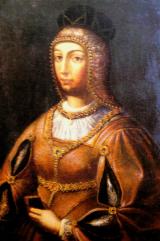
María de Aragón (Córdoba, Reino de Córdoba, 29 de junio de 1482 - Lisboa, Portugal, 7 de marzo de 1517), cuarta hija de los Reyes Católicos, Isabel I de Castilla y Fernando II de Aragón, fue reina de Portugal como segunda esposa de Manuel I, fallecido en 1521.
Read more...
Manuel I of Portugal

Manuel I (European Portuguese: [mɐnuˈɛl]; 31 May 1469 – 13 December 1521), known as the Fortunate (Portuguese: O Venturoso), was King of Portugal from 1495 to 1521. A member of the House of Aviz, Manuel was Duke of Beja and Viseu prior to succeeding his cousin, John II of Portugal, as monarch. Manuel ruled over a period of intensive expansion of the Portuguese Empire owing to the numerous Portuguese discoveries made during his reign. His sponsorship of Vasco da Gama led to the Portuguese discovery of the sea route to India in 1498, resulting in the creation of the Portuguese India Armadas, which guaranteed Portugal's monopoly on the spice trade. Manuel began the Portuguese colonization of the Americas and Portuguese India, and oversaw the establishment of a vast trade empire across Africa and Asia.
Manuel established the Casa da Índia, a royal institution that managed Portugal's monopolies and its imperial expansion. He financed numerous famed Portuguese navigators, including Pedro Álvares Cabral (who discovered Brazil), Afonso de Albuquerque (who established Portuguese hegemony in the Indian Ocean), among numerous others. The income from Portuguese trade monopolies and colonized lands made Manuel the wealthiest monarch in Europe, allowing him to be one of the great patrons of the Portuguese Renaissance, which produced many significant artistic and literary achievements. Manuel patronized numerous Portuguese intellectuals, including playwright Gil Vicente (called the father of Portuguese and Spanish theatre). The Manueline style, considered Portugal's national architecture, is named for the king.
Read more...